The process varies depending on the type of tea, but these are the key steps.
1. Harvest — Choosing the Leaf
Tea making begins with what you pick.
Young buds and leaves are often used for delicate teas, while more mature leaves may be chosen for other styles.
The season, cultivar, and growing conditions also affect the character of the leaf.
The tea's story begins in the field.
2. Withering — Removing Moisture
Fresh tea leaves contain a lot of water.
During withering, the leaves are spread out and allowed to lose moisture gradually. This makes them softer and prepares them for further processing.
Withering also begins to change the leaf's aroma and flavor.
Withering prepares the fresh leaf for transformation.
3. Oxidation — Developing Flavor
When the leaf is exposed to oxygen, natural enzymes inside the leaf cause chemical changes.
This process, called oxidation, can develop floral, fruity, honeyed, malty, and deeper flavors.
Green tea is made with little intentional oxidation. Oolong is partially oxidized, while black tea is generally much more extensively oxidized.
Oxidation helps shape the tea's flavor and character.
4. Fixation — Stopping Oxidation
When the tea maker reaches the desired level of oxidation, heat is applied to stop further enzymatic changes.
This step is called fixation.
The timing is especially important for oolong and green tea, where controlling oxidation helps preserve the desired character.
Fixation decides when the transformation stops.
5. Rolling — Shaping the Leaf
The leaves are twisted, rolled, or pressed into their final shape.
Rolling does more than change appearance. It also breaks some of the leaf structure and helps prepare the tea for extraction during brewing.
Taiwanese oolong is often tightly rolled into small, semi-spherical leaves that slowly unfurl in hot water.
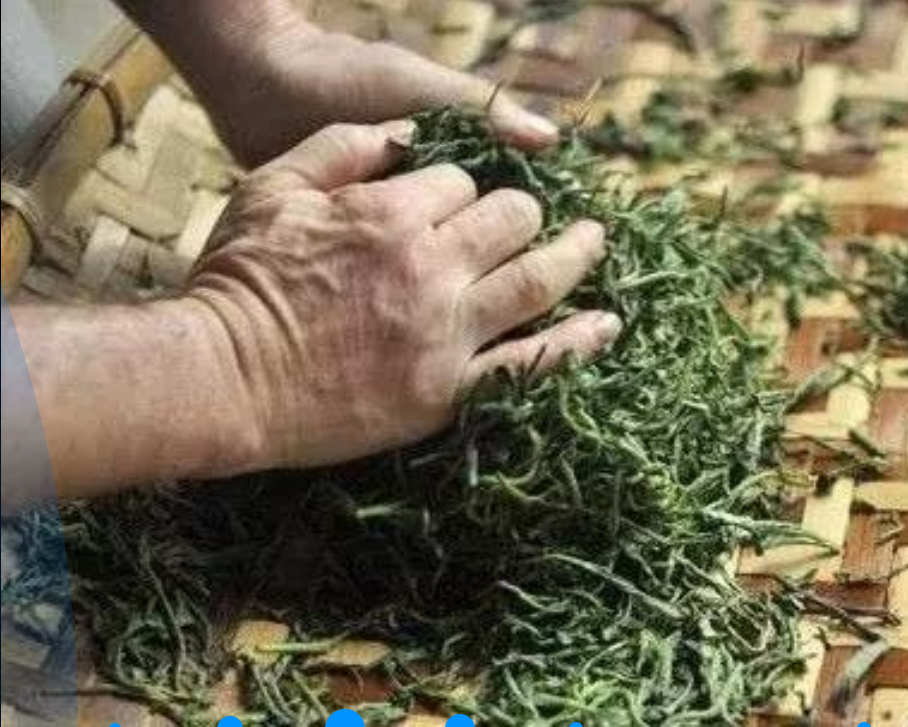
The shape of the leaf is part of how the tea is made.
6. Refining & Roasting — Finishing the Tea
After processing, the tea may be refined and sorted to remove unwanted stems or broken pieces and prepare it for packaging.
Some teas also go through roasting, where controlled heat develops deeper aromas, sweetness, and texture.
A light roast may preserve floral qualities, while a deeper roast can bring out notes of nuts, caramel, dried fruit, or toast.
Roasting adds another layer of character.
From Leaf to Cup
A fresh tea leaf may look simple, but a lot happens before it reaches your cup.
Harvest → Withering → Oxidation → Fixation → Rolling → Refining & Roasting
Not every tea follows exactly the same path.
What makes green tea different from oolong, or oolong different from black tea, is largely how these steps are used, how far they go, and when the tea maker decides to stop.
From a fresh leaf to the tea in your cup, every step shapes what you taste.
← Back to Tea Knowledge