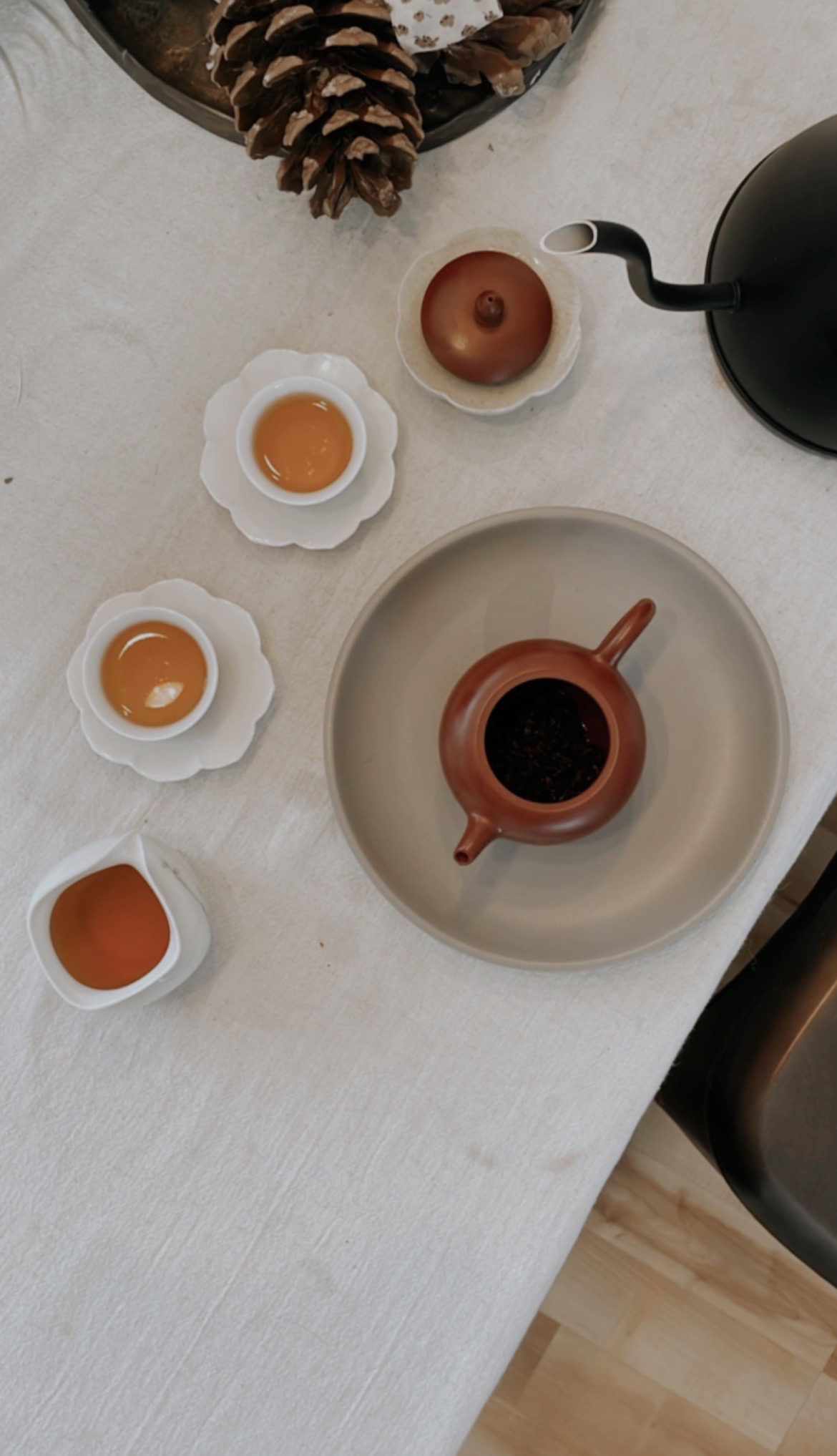
Golden Hour
Longan sweetness, honey, orchard fruit complexity, natural woodiness. A rich, intricate tea shaped by nature and craft.
The Story of Golden Hour
Golden Hour is a Bai Hao oolong, famous among tea professionals for one remarkable characteristic: the presence of leafhopper damage (小綠葉蟬, xiaolu ye zhan).
In conventional farming, leafhoppers are pests to be eliminated. But in traditional Oriental Beauty production, they're partners. When leafhoppers feed on the leaves, the plant triggers a natural defense response, producing aromatic compounds that create those signature fruity, honey-like notes.
The leafhopper-induced oxidation creates fruity compounds (benzaldehyde, hexenal) that taste like longan, peach, and ripe orchard fruit. Medium roasting then deepens these notes into warmth and honey. It's nature and craft in perfect balance.
Terroir & Process
Hsinchu's eastern mountains offer the perfect conditions for this tea: cooler temperatures slow leaf growth, concentrating flavor. The leafhoppers are naturally present here, thriving in the diverse mountain ecosystem. The farmers' skill lies in knowing when to pick—usually early morning, when the leaf has the right balance of enzyme activity and leafhopper damage.
The processing is meticulous: light initial roasting to stop oxidation at the perfect moment, then medium roasting to develop the warm, woody undertones. The result is a tea that evolves across multiple infusions—each steep revealing different layers of complexity.
Brewing Guide
Gongfu Style (Recommended)
Why Hot Water?
Golden Hour's medium roasting creates robust compounds that need hot water to fully express. Higher temperature opens up the fruity and honey notes while extracting the pleasant woodiness without bitterness.
What to Notice
- First steep: Immediate fruity aroma (longan, ripe stone fruit), honey sweetness
- Middle steeps: Wood and spice emerge, complexity deepens
- Later steeps: Warm, lingering aftertaste, subtle floral notes
- Mouthfeel: Noticeably drying yet smooth—traditional oolong character
Best Time to Enjoy
Golden Hour shines in autumn and winter—its warmth and fruit notes pair beautifully with cooler weather. It's also ideal for afternoon tea or evening contemplation. Unlike lighter oolongs, its roast level and complexity reward multiple infusions over an extended tasting session.
Pair it with: dark chocolate, roasted nuts, aged cheeses, or simply quiet reflection.
About the Leafhopper
The presence of leafhopper damage (often visible as small brown spots on the dried leaves) is actually a mark of authenticity in Oriental Beauty oolongs. It indicates the tea was produced traditionally, without pesticides, and that the farmer understood the balance between ecology and flavor.
Seeing those spots isn't a defect—it's a sign of living tradition.
Storage Tips
Keep Golden Hour in an airtight container, away from light and strong odors. Its medium roast level gives it excellent aging potential—this tea actually improves over 12–24 months when stored properly (cool, dry environment). The fruity notes deepen into more complex wood and honey notes over time.