Tea Oxidation Spectrum
Explore how processing transforms a single leaf into the world's tea varieties
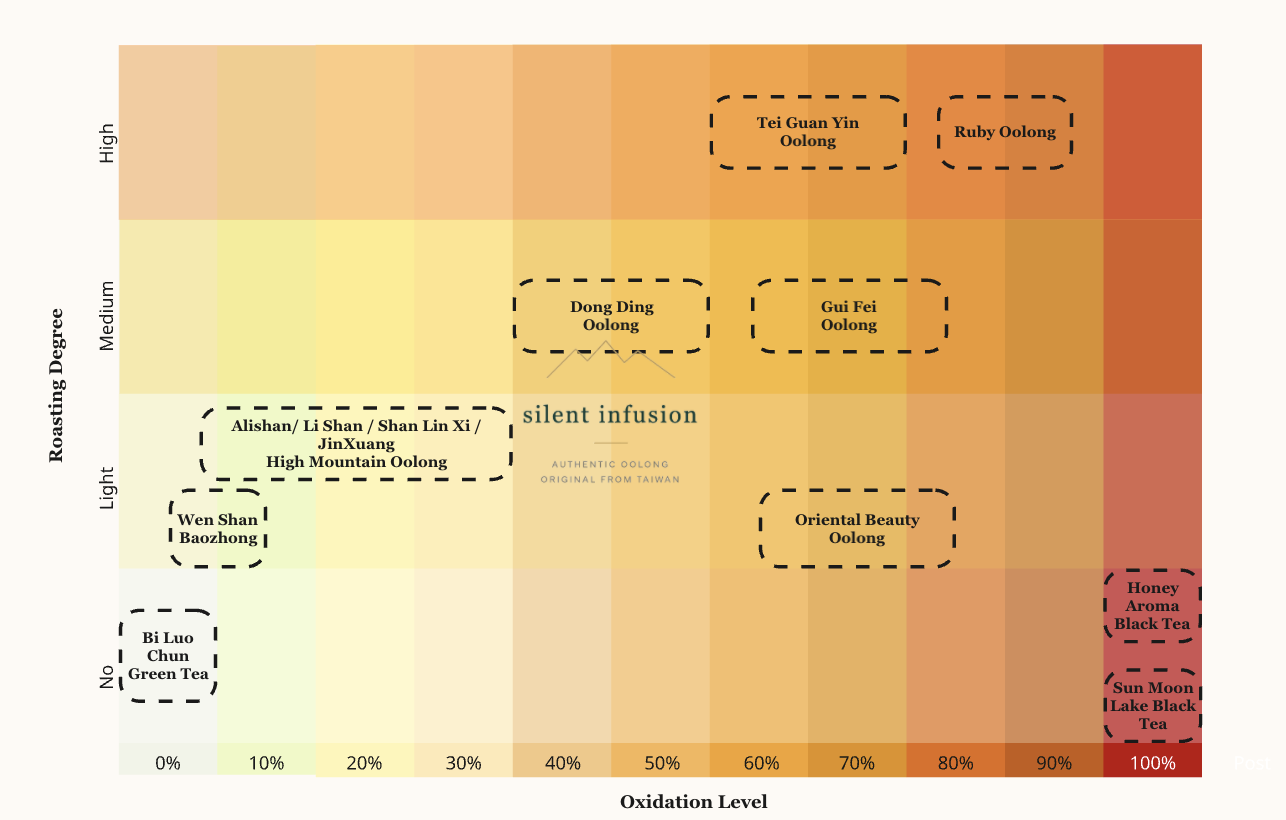
What creates the incredible diversity of flavors is not the species itself, but how the leaves are processed. Through oxidation, roasting, shaping, and careful craftsmanship, one leaf can become a delicate green tea, a floral oolong, or a rich black tea. Understanding this spectrum is the first step to appreciating tea—not as different plants, but as different expressions of the same leaf.
Oxidation Level
The horizontal axis represents the degree of oxidation, ranging from 0% (unoxidized green tea) to 100% (fully oxidized black tea). This process determines the color, flavor, and body of the tea.
Roasting Degree
The vertical axis shows roasting intensity, from light to high. Roasting adds warmth, depth, and complexity to the tea, particularly in oolong production.
Single Leaf Origin
All teas come from the same plant—Camellia sinensis. What distinguishes them is the processing method, timing, and artisanal technique applied after harvest.
Flavor Complexity
Light oxidation and roasting produce delicate, floral, and grassy notes. Medium processing creates the characteristic oolong balance. High oxidation develops fruity, honey, and chocolate undertones.